What is KP?

Why do I need sunscreen?
July 20, 2023
Aesthetician vs Dermatologist
August 9, 2023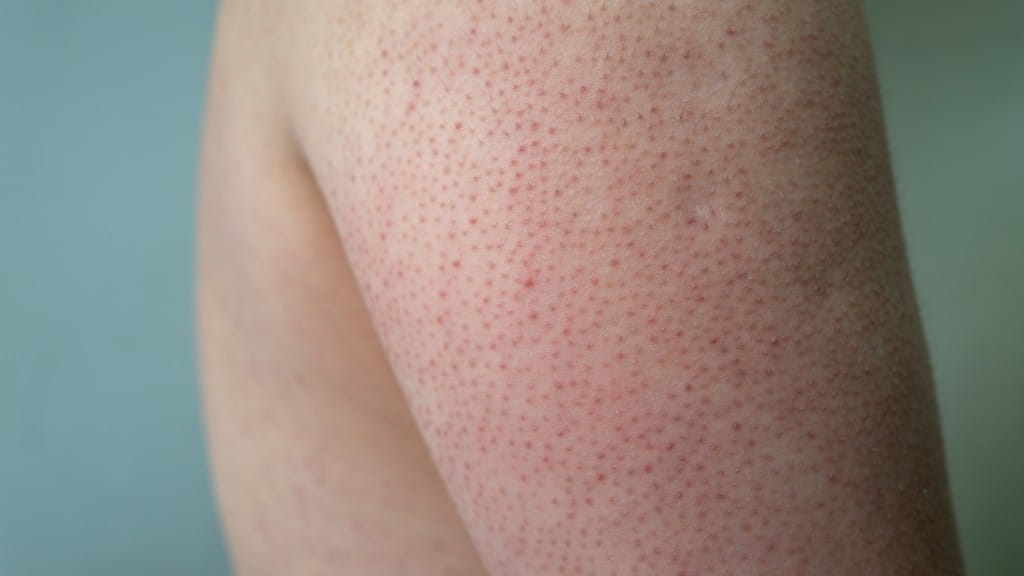
What is KP?
Keratosis Pilaris also known as KP, chicken skin or strawberry skin, is a skin condition that presents as rough patches with acne-like bumps on the skin. The bumps begin to develop when the hair follicle is blocked and feels a bit like sandpaper or goose bumps. This is usually seen on the arms, thighs, cheeks and butt. They don’t usually hurt or itch, and are usually white or red. The condition typically worsens when the seasonal changes create low humidity and dry skin. KP is treatable and more often is not serious. The condition usually disappears or lessens by the age of 30.
What causes KP?
KP is caused by the buildup of keratin (a hard protein meant to protect the skin from harmful substances and infections) blocking the opening of the hair follicle, essentially creating a keratin plug. While scientists aren’t completely sure why the keratin builds up, they think it has to do with genetic disease or skin conditions such as atopic dermatitis (eczema).
How do I treat KP?
There are treatments you can do at home to help with your KP. You could also see an aesthetician or a dermatologist. When seeing a professional, it is important to note that the treatments are usually done in a series with a certain amount of healing time in between each treatment.
Treating KP, while seeming simple, it does take time and can get worse before it gets better. Treatment involves a consistent exfoliation and moisturizing regimen. Exfoliation can include; salt or sugar scrubs, chemical peel/exfoliator (keratolytic), or microdermabrasion. These help to remove and reduce the buildup of dead skin, but avoid excessive scrubbing as it can irritate and worsen the KP. Apply a moisturizer after cleansing the skin, when your skin feels dry, or after being in water. Moisturizing can help reduce and prevent dead skin. There is no cure for KP, which is why the treatment plan needs to be consistent.
For the treatment, here are some tips;
- do not scrub the skin aggressively
- give time between treatments for skin to heal
- treat the skin 2-3x a week
- avoid bar soap (as it is very drying)
- use a humidifier can help prevent dry skin
- waxing/shaving can cause a flare up of KP
- using self-tanner can make the bumps more obvious.
For the moisturizer, here are some tips;
- use a thick oil free cream or ointment instead of lotion
- pick a moisturizer with Urea or Lactic acid.
Remember internal health is just as important as external health so try to avoid foods that contribute to internal inflammation. Consider removing these from your diet;
- Dairy,
- Soy,
- Peanuts,
- Vegetable oils (omega 6 fatty acids),
- Trans Fats,
- Sugar,
- Grains,
- and Gluten.
- Adding or increasing certain vitamins and foods can also help reduce KP.
Consider adding more vegetables, increasing omega 3 intake, increasing fat soluble vitamin intake (Vitamins A, D, E, K). When implementing dietary changes for KP, we suggest starting with 3 months to see if there are any changes or reductions in your KP and adjust from there.